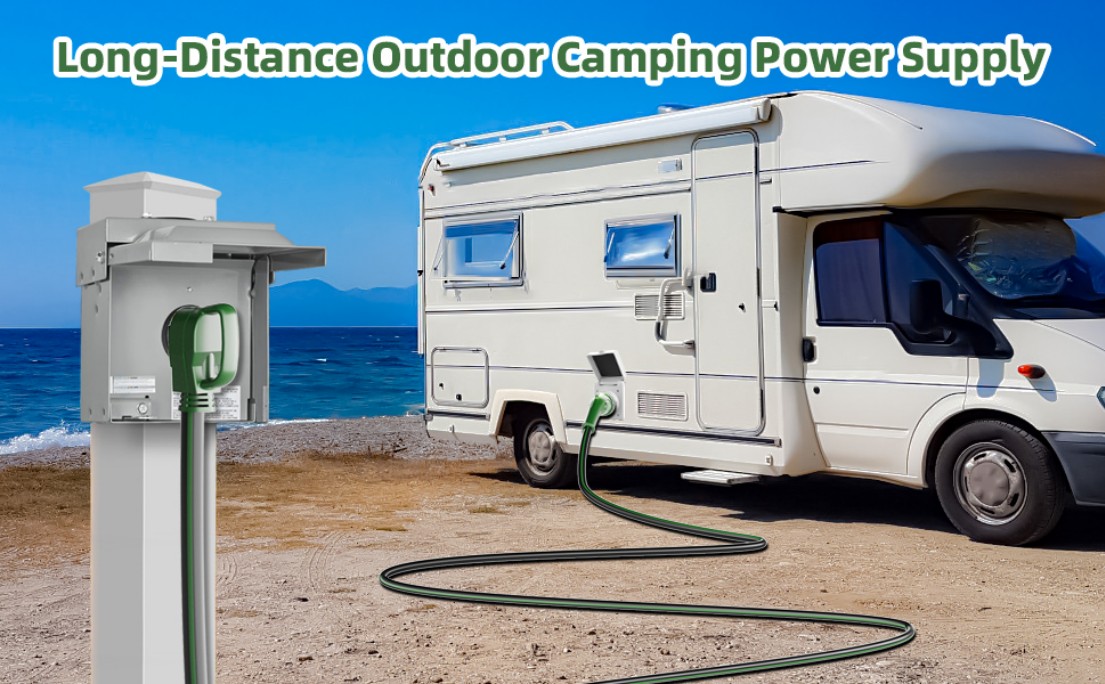
As an RV enthusiast, you understand the importance of having the right gear for a smooth trip. Among the essentials, an RV extension cord is often overlooked but can make a significant difference in your experience. Picture arriving at a scenic campsite only to realize that your extension cord can't handle your RV’s electrical load. Choosing the right RV extension cord is vital for a trouble-free adventure.
The key difference between 30-amp and 50-amp RV extension cords is their amperage rating and wire gauge, which determines their current-carrying capacity and voltage drop.
30 Amp RV Extension Cord:
1.Supports up to 30 amps of electrical current
2.Typically uses 10 AWG or 8 AWG wire gauge
3.Compatible with 30-amp power inlets and pedestals
4.Ideal for basic electrical needs like lights, appliances, and small air conditioning units
50 Amp RV Extension Cord:
1.Supports up to 50 amps of electrical current
2.Typically uses 6 AWG or 4 AWG wire gauge for higher capacity
3.Designed for larger RVs with 50-amp power inlets and pedestals
4.Essential for powering multiple high-draw appliances like large air conditioning units and water heaters
Ensure your extension cord matches your RV's power requirements to prevent overheating, voltage drops, and potential hazards. Using an undersized cord can to dangerous electrical issues and compromise your safety.


 English
 中文简体
中文简体

 NO.565,South of Xihuan Rd,Yuyao City Zhejiang China.
 0086-574-62599999/62593088
 0086-574-62598888
 ryan.yu@nbwell.com